What is the best air conditioner for a 700 sq ft room?
The short answer
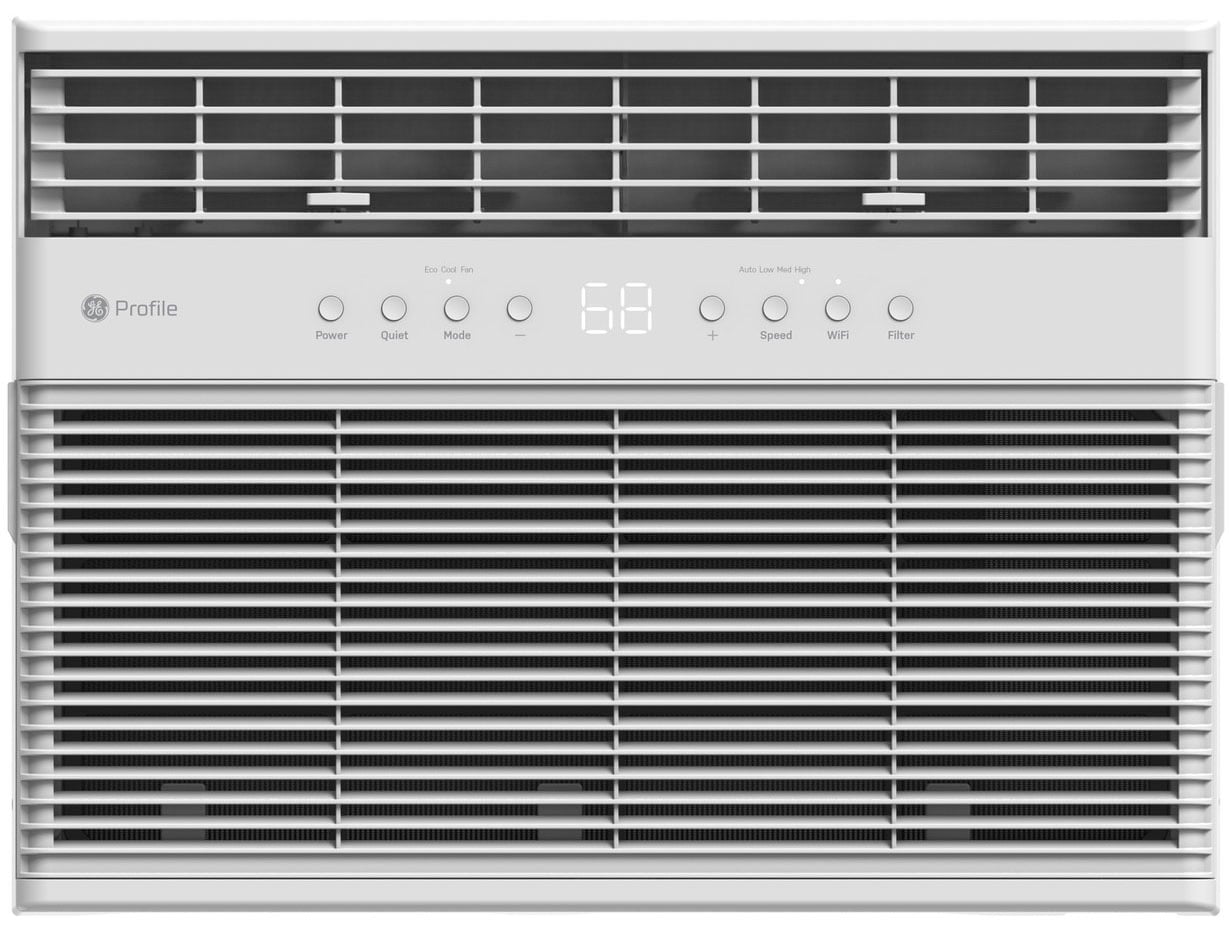
For a 700 sq ft room, the closest match we list is the GE Smart Window Air Conditioner 14,000 BTU 115V, a window unit that covers up to 700 sq ft at 60 dB(A), in stock at Abt Electronics for $409. The GE Smart Window Air Conditioner 14,000 BTU 115V is currently at the lowest price we have tracked at Abt Electronics since Jul 25, 2026 ($409).
Prices last refreshed Nov 10, 2026Independent, nobody pays for placement. compare.ac may earn a commission if you buy through a store link, at no cost to you.
A 700 sq ft open-plan space has a specific cooling need. Undersize it and the unit runs flat out without ever cooling; oversize it and it short-cycles and leaves the room humid. These are the real units whose coverage matches a 700 sq ft room, sized by our own rule and ranked by how closely they fit.
compare.ac may earn a commission on purchases, at no cost to you. As an Amazon Associate I earn from qualifying purchases.
How we chose
We size every unit to a 700 sq ft room using the ENERGY STAR room air conditioner sizing chart, then rank by how closely each unit's stated (or cooling-power-estimated) coverage matches the room. Units that would be undersized are excluded. Buyable, fully-specced units break ties.
A common US rule of thumb for a standard, reasonably insulated room with an 8-foot ceiling is about 20 BTU per hour per square foot, so a 300 sq ft room is often quoted around 6,000 BTU and a 500 sq ft room around 10,000 BTU. compare.ac instead sizes against the official ENERGY STAR room air conditioner chart, which is not a flat rate: it recommends about 7,000 BTU for that same 300 sq ft room and about 12,000 BTU for a 500 sq ft room, then adjusts up for a hot or humid climate and down for a mild one once you pick your region. Add capacity for a sunny west-facing or top-floor room, a kitchen, or extra people who are regularly in it. Undersizing means the unit runs flat out and never cools; oversizing short-cycles and leaves the room cool but clammy.
Does my climate change how much cooling I need?
Yes, more than almost anything except the size of the room. compare.ac's base sizing, before any climate adjustment, follows the official ENERGY STAR room air conditioner chart, which assumes a temperate summer. A hot, dry region like Arizona, or a hot, humid one like Florida and the Texas Gulf coast, realistically needs on the order of 20 to 30 percent more cooling per square foot, because the outdoor design temperature is higher and, in humid places, the unit also spends energy removing moisture (the latent load). A mild, marine climate such as the Pacific Northwest or coastal New England needs a little less. compare.ac applies this adjustment once you pick your region in the tool, using ASHRAE Standard 169 design temperatures and ACCA Manual-J regional sizing practice, and always shows both your real room size and the adjusted figure it sizes against. For a final purchase, a professional Manual-J load calculation for your specific home is the accurate method.
How much noise is acceptable?
Noise is measured in dB(A). A quiet split indoor unit on a low setting can be around 19 to 25 dB(A), which is barely audible and fine for a bedroom. Around 30 to 35 dB(A) is a soft hum that most people accept in a living room. Portable monobloc units are usually 52 to 58 dB(A) because the compressor sits in the room with you, which is closer to a dishwasher and can disturb sleep. If quiet matters, a split almost always wins; if you only cool occasionally, a portable may be acceptable.
Do I need a professional installer?
For a split or multi-split, yes. There is no US law banning DIY installation as such, but under EPA Section 608 only a certified technician may open the refrigerant circuit, and the EPA states plainly that this includes connecting or disconnecting the pre-charged line sets sold with “DIY” mini-split kits. That is worth knowing, because it is the opposite of how those kits are usually marketed. Doing the refrigerant work yourself voids the manufacturer warranty and risks a dangerous, illegal release. A portable monobloc, and most window units, need no installer at all: they are factory-sealed, so you set the unit down or fit it in the window and run the exhaust yourself.
Why does a portable air conditioner sometimes feel weak?
A single-hose portable pushes its hot exhaust out of one tube. That creates negative pressure indoors, which sucks warm air back in through gaps around doors and windows, so in real conditions it often delivers only about half to two-thirds of its rated capacity. It is still a real AC and will cool a room, just less than the box claims. Sizing up, sealing the window kit well, or choosing a split where possible all help.
 $409Lowest since Jul 25, 2026 $409
 WindowENERGY STAR In stock
 WindowENERGY STAR In stock
 Through-the-wall In stock
 Through-the-wall In stock
 Through-the-wall In stock