Windmill AC vs LG Dual Inverter, 8,000 BTU
The LG 8,000 BTU Dual Inverter Smart Wi-Fi Window Air Conditioner and the Windmill 8,000 BTU Inverter Smart Window Air Conditioner side by side on one honest scale: cooling, room coverage, noise, energy rating and live price, with which one actually fits your room. Every number is the manufacturer's own or a live retailer price. We never invent a spec.
The verdict
For your 700 sq ft room, neither is an ideal fit: the LG Dual Inverter LW8022IVSM is undersized and the Windmill 08W2Wi is undersized. Compare their specs side by side below, or try a different room size. On ENERGY STAR's certification, the LG Dual Inverter LW8022IVSM rates CEER 15.5 against 15 for the Windmill 08W2Wi, so it uses about 3% less electricity for the same cooling.
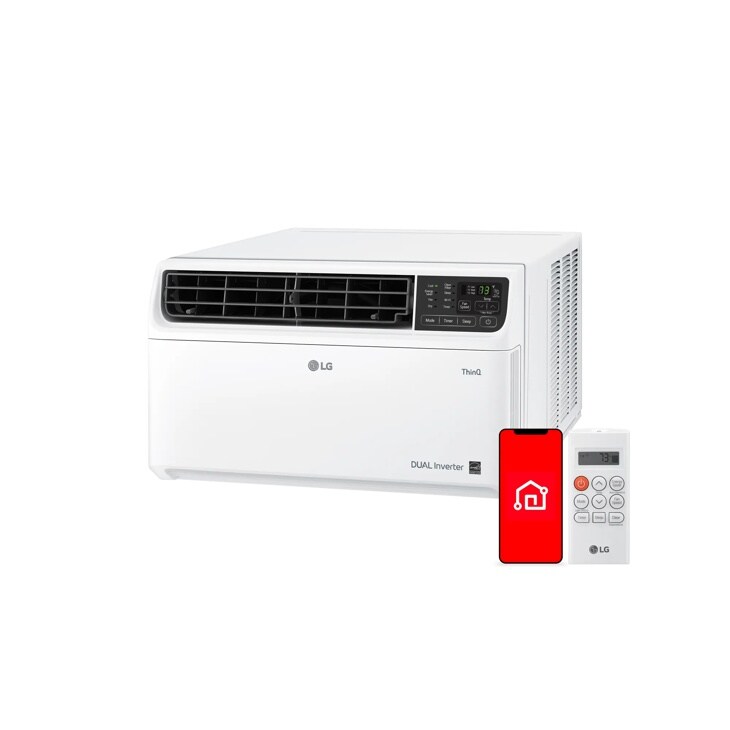 LG 8,000 BTU Dual Inverter Smart Wi-Fi Window Air ConditionerWindowENERGY STAR $449list See details Search Amazon |  Windmill 8,000 BTU Inverter Smart Window Air ConditionerWindowENERGY STAR In stock $459.99 Buy at Sylvane Search Amazon | |
|---|---|---|
| Cooling & fit | ||
| Room fit | Undersized for 700 sq ft | Undersized for 700 sq ft |
| Cooling power | 8,000 BTU · 2.3 kW | 8,000 BTU · 2.3 kW |
| Covers | up to 350 sq ft | up to 350 sq ft |
| Comfort | ||
| Indoor noise | 44 dB(A)about as loud as a quiet library | 42 dB(A)about as loud as a quiet library |
| Indoor unit size | Average | Average |
| Efficiency | ||
| Energy rating | ENERGY STAR | ENERGY STAR |
| Running cost/yr (est.) | ~$70/yr | ~$75/yr |
| Practicalities | ||
| Heats too | No | No |
| Refrigerant | R-32 | R-32 |
| Wi-Fi | Yes | Yes |
| Install | Self-fit, no pro needed | Self-fit, no pro needed |
| Outdoor unit | No | No |
| Warranty | - | 1-Year Limited Warranty |
| Price | ||
| Price | $449 list | $459.99 |
compare.ac may earn a commission on purchases, at no cost to you. It never changes the price you pay or how we rank units. As an Amazon Associate I earn from qualifying purchases.
The line behind it
LG Dual Inverter
LG builds its Dual Inverter room units around a variable-speed compressor that changes speed to hold the temperature instead of cycling on and off. The 23,500 BTU LW2422IVSM needs a 208/230 V circuit, and the LP1419IVSM in the line is a portable that LG rates at 10,000 BTU by the DOE (SACC) method and 14,000 BTU by the older ASHRAE method.
Sources: LG, LW1522IVSM product page; LG, LW2422IVSM product page; LG, LP1419IVSM product page, read September 30, 2026.
Every LG Dual Inverter modelHow we compare these
Both units are scored on the exact same scale, from the manufacturer's own published specs and the live retailer price where we have one. Room fit uses the official ENERGY STAR sizing chart, or an estimate from cooling power when a maker publishes no coverage. Where the two efficiency scales are not comparable, we never crown a winner. Nobody can pay for placement.
Read our full methodologyFrequently asked
Should I buy the LG Dual Inverter LW8022IVSM or the Windmill 08W2Wi?
Do I need a professional to install the LG Dual Inverter LW8022IVSM or the Windmill 08W2Wi?
How much cooling power do I need for my room?
What will it cost to run, and what do the efficiency ratings mean?
More head-to-head comparisons
Not sure which kind of AC you need? See the buying guides or the system types.
Not sure this is the right type?
Buying guides to help you decide
The bigger questions behind this comparison, answered from live prices and real specs.