GE Profile ClearView PHNT10CC Inverter vs Hisense 10,000 BTU UltraSlim Window Air Conditioner
The GE Profile ClearView PHNT10CC Inverter and the Hisense 10,000 BTU UltraSlim Window Air Conditioner side by side on one honest scale: cooling, room coverage, noise, energy rating and live price, with which one actually fits your room. Every number is the manufacturer's own or a live retailer price. We never invent a spec.
The verdict
For your 500 sq ft room, neither is an ideal fit: the GE Profile ClearView PHNT10CC Inverter is undersized and the Hisense 10,000 BTU UltraSlim Window Air Conditioner is undersized. On the numbers, the GE Profile ClearView PHNT10CC Inverter is cheaper at $394. Compare their specs side by side below, or try a different room size.
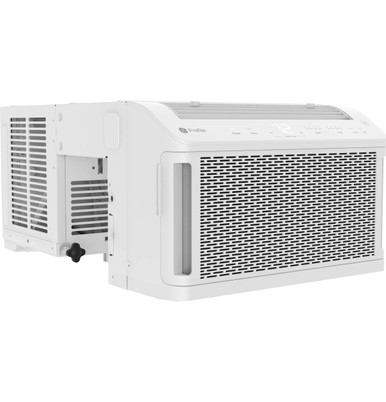 GE Profile ClearView PHNT10CC InverterWindowENERGY STAR In stock $394 Buy at Abt Electronics |  Hisense 10,000 BTU UltraSlim Window Air ConditionerWindow In stock $509 Buy at Sylvane | |
|---|---|---|
| Cooling & fit | ||
| Room fit | Undersized for 46.5 m² | Undersized for 46.5 m² |
| Cooling power | 10,300 BTU · 3 kWBest | 10,000 BTU · 2.9 kW |
| Covers | up to 450 sq ft | up to 450 sq ft |
| Comfort | ||
| Indoor noise | 40 dB(A)about as loud as a quiet library | - |
| Indoor unit size | Average | Average |
| Efficiency | ||
| Energy rating | ENERGY STAR | - |
| Running cost/yr (est.) | ~$95/yr | Not rated |
| Practicalities | ||
| Heats too | No | No |
| Refrigerant | R-32 | - |
| Wi-Fi | Yes | - |
| Install | Self-fit, no pro needed | Self-fit, no pro needed |
| Outdoor unit | No | No |
| Warranty | 1-Year Limited Warranty | - |
| Price | ||
| Price | $394Best | $509 |
compare.ac may earn a commission on purchases, at no cost to you. It never changes the price you pay or how we rank units.
How we compare these
Both units are scored on the exact same scale, from the manufacturer's own published specs and the live retailer price where we have one. Room fit uses the official ENERGY STAR sizing chart, or an estimate from cooling power when a maker publishes no coverage. Where the two efficiency scales are not comparable, we never crown a winner. Nobody can pay for placement.
Read our full methodologyFrequently asked
Should I buy the GE Profile ClearView PHNT10CC Inverter or the Hisense 10,000 BTU UltraSlim Window Air Conditioner?
Which is cheaper, the GE Profile ClearView PHNT10CC Inverter or the Hisense 10,000 BTU UltraSlim Window Air Conditioner?
Do I need a professional to install the GE Profile ClearView PHNT10CC Inverter or the Hisense 10,000 BTU UltraSlim Window Air Conditioner?
How much cooling power do I need for my room?
What will it cost to run, and what do the efficiency ratings mean?
Not sure this is the right type?
Buying guides to help you decide
The bigger questions behind this comparison, answered from live prices and real specs.